What is Lughnasad?
On July 31, a rainy summer day already giving a taste of the fading season, we celebrated Lughnasad at Kurki Ecovillage. With the help of gentle harvest-magick practices we took a moment to slow down and honour the gifts of nature. Lughnasad is one of the eight Sabbats of the Wheel Of The Year. It is more commonly known as Lammas, but for translation reasons – ‘lammas’ means ‘sheep’ in Finnish – I stuck to Lughnasad.
Now, you might wonder, what exactly is The Wheel of the Year and Lughnasad? As a neo-pagan invention, the Wheel of the Year is a cycle of eight seasonal celebrations (the Sabbats), drawing inspiration from pre-Christian, mostly European agricultural and pagan traditions. Much like an almanac, certain holidays served to structure the farmwork throughout the harvest year. It is important to note though, that there hasn’t been this set of recurring celebrations in the days long gone. Instead, they were constructed in the 20th century. The Wheel starts in late autumn with Samhain, which is now mostly known as Halloween. It then follows the seasons through winter, spring, summer and back to autumn.
In my practice as a modern witch, I’ve been fascinated by the Sabbats as a way of honouring nature and the changing seasons. Celebrating them today means reconnecting with our traditions and with nature as well as experiencing a certain timelessness and primal power. That’s why I was very eager to organise a Sabbat during my time here at Kurki Ecovillage.
Lughnasad is the first harvest celebration. Marking the end of summer and the beginning of the darker season it is celebrated on August 1st. It is a time of abundance, where the sun energy flows through the soil into the seeds of the plants – a good moment for harvesting. That’s why its main symbol is a loaf of bread.
On Lughnasad we come together to say thanks and appreciate nature’s gifts to us. It sets a time to reflect on the first half of the year and being grateful for the growth outside and inside of ourselves. But it also reminds us that there is still a lot of work to be done throughout the remaining two harvest Sabbats, Mabon and Samhain.
Why did I want to organise a Seasonal Sabbat?
My goal with this project was to share traditional knowledge and enthusiasm about nature, the seasons and the Sabbats. Most importantly, I wanted to share one of my passions, which is modern witchcraft. With the event I could offer the opportunity to honour nature and the season, especially for people who usually do not pay so much attention to what each season really has to offer. Furthermore, I provided time and space for mindfulness, slowing down, gratefulness, intention-setting and other magick. For me personally, this project was a chance to learn how to plan and organise my own event and how to communicate my interests and topics of passion.
Planning and preparations
I started preparing for the celebration with research. What is Lughnasad about? What does it symbolize? And most importantly, how can I transfer its symbolism into hands-on practices and rituals for a group of people, that most probably don’t know anything about modern witchcraft. What I found very interesting were the parallels to Finnish and especially Karelian traditions. In Finnish lore there used to be two festive days that very much align with Lughnasad, in my opinion (Ollin Päivä and Laurin Päivä at the beginning and middle of August).
Another task was writing invitations to the villagers, that kind of explain what the event will be about, but without giving too much info dump. Here you can see the invitations I created:
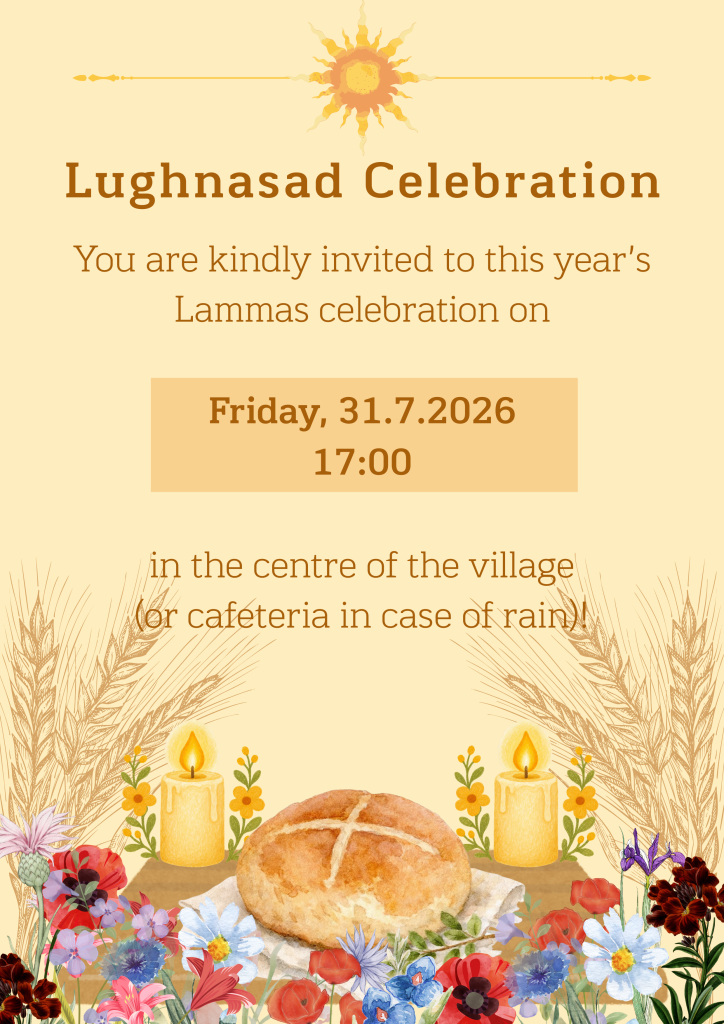
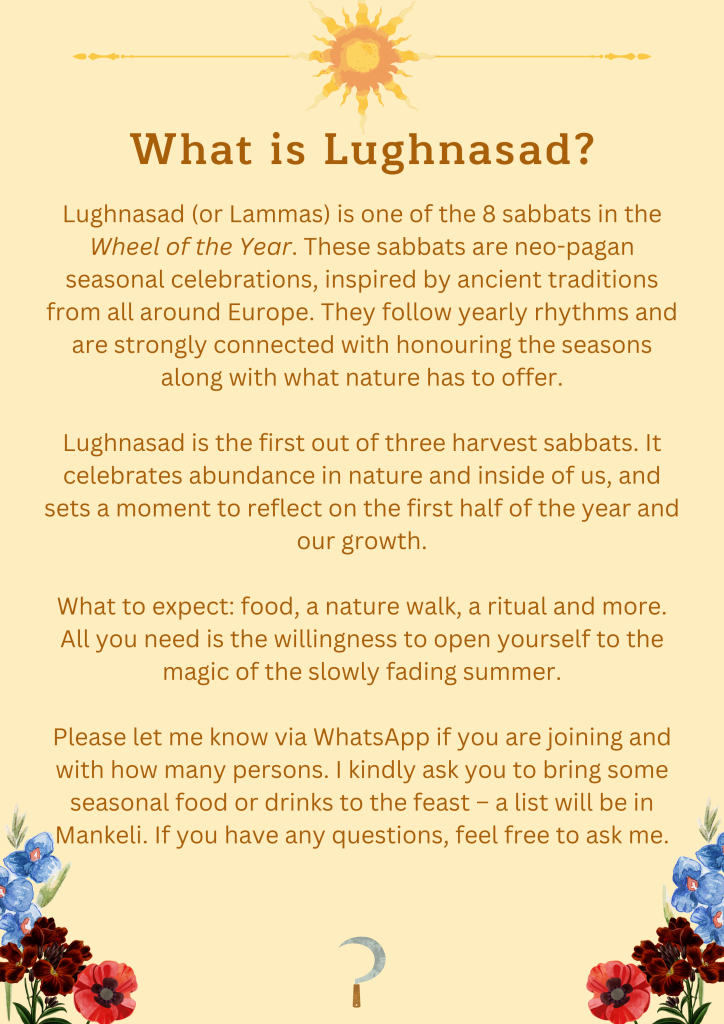
The closer July 29th came, the more needed to be done. I prepared the rituals, wrote a script for a guided meditation, prepared sourdough and finally decorated the space with wildflowers.
Celebrating Lammas
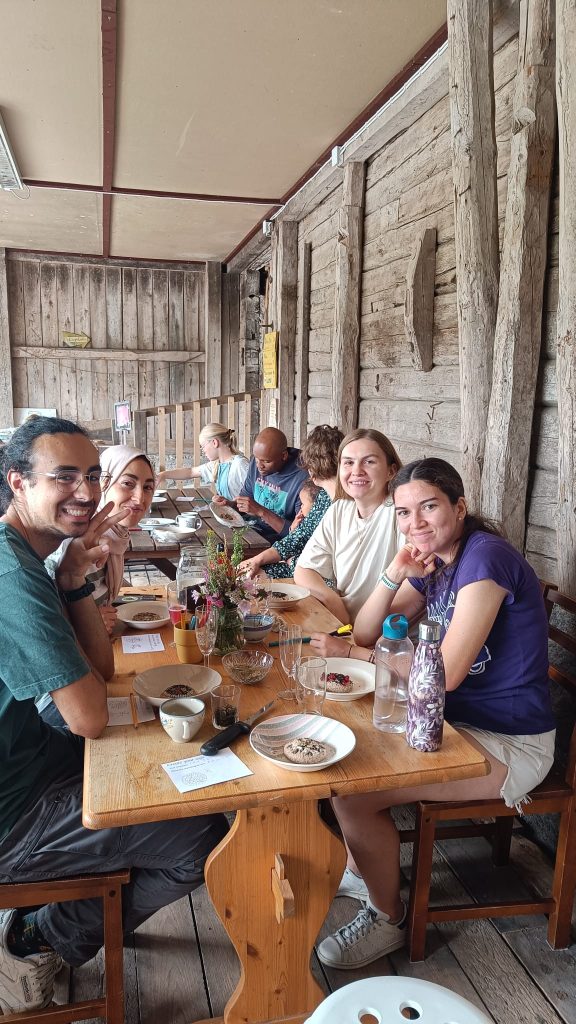
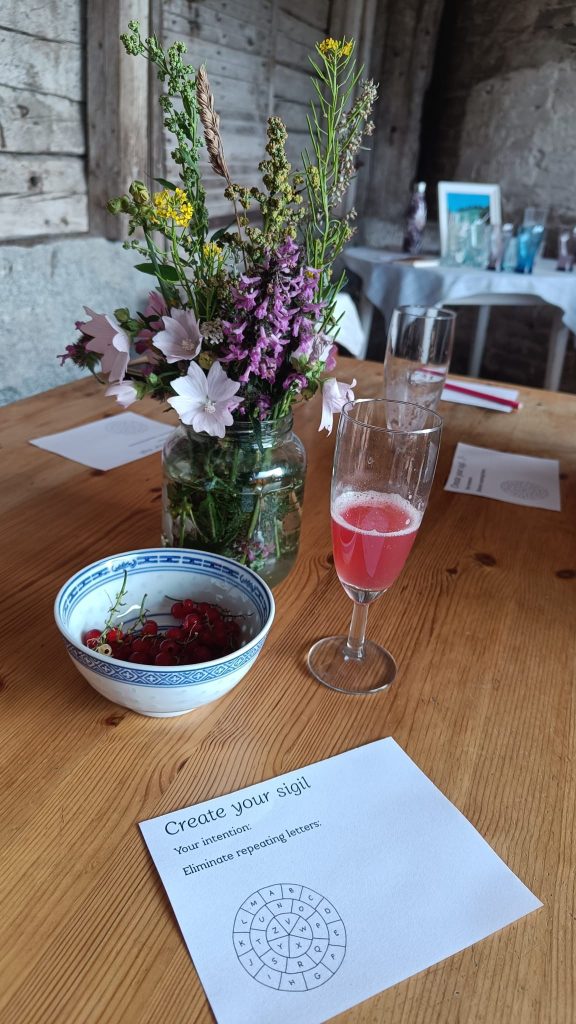
In the afternoon we gathered in Kafetto. Everyone brought a dish for the feast we were gonna have later. I opened the evening with a glass of Red Currant Juice for everyone and a short presentation about Lughnasad, so that the villagers could learn about what fascinates me so much.
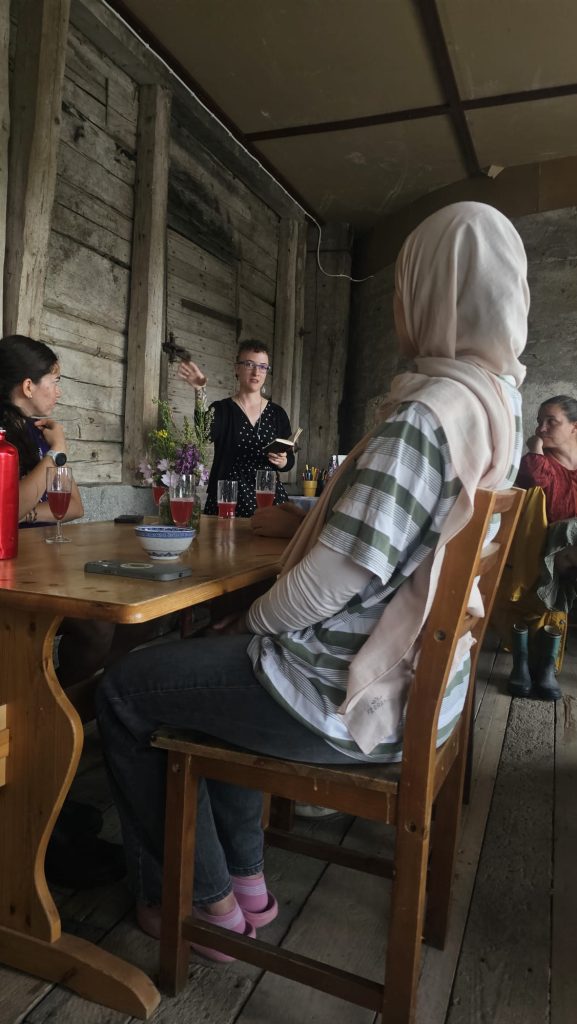
The first part of the Lughnasad ritual was a guided meditation focussing on our growth and the goals that we have reached so far. We reflected on what can be harvested now and what needs some more growth. Thankfulness was a huge part of this mindfulness exercise too. The meditation ended with formulating an intention for the next coming weeks and months.
We then took our personal intentions and turned them into sigils. Sigils are ancient and powerful symbols that have been used for ages – like the pentagram or the cross. Now the fun part began: decorating our own loafs of bread (the main symbol of Lughnasad) with our sigils and seeds (as seeds are also a big part of the harvest symbolism). We had a lot of fun and I was impressed how different the loafs turned out.
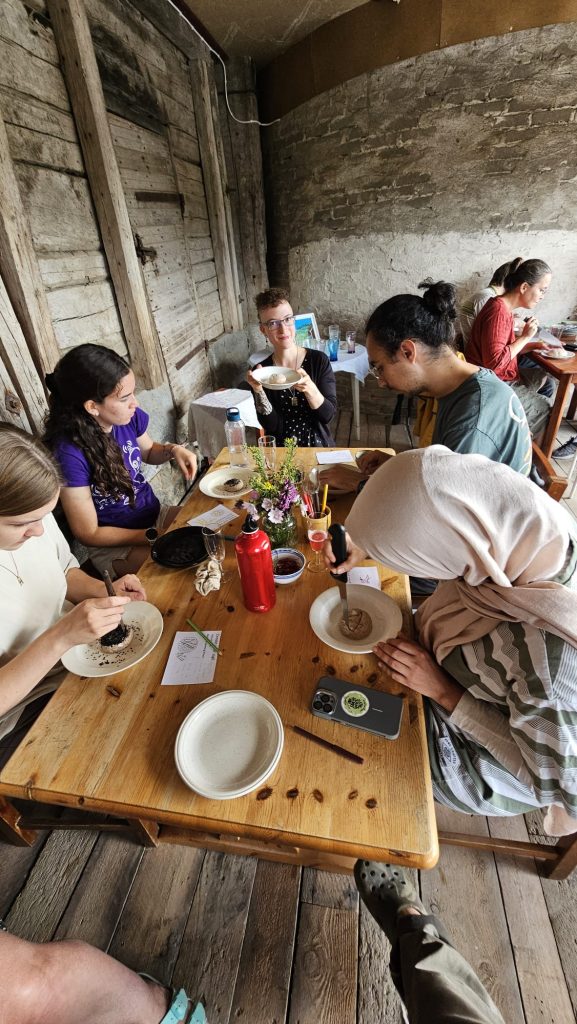
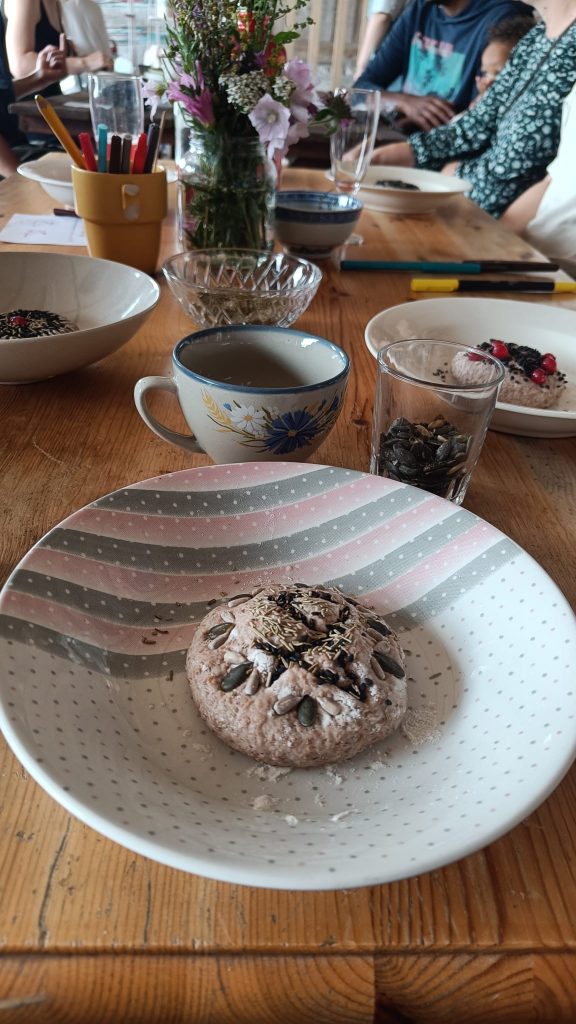
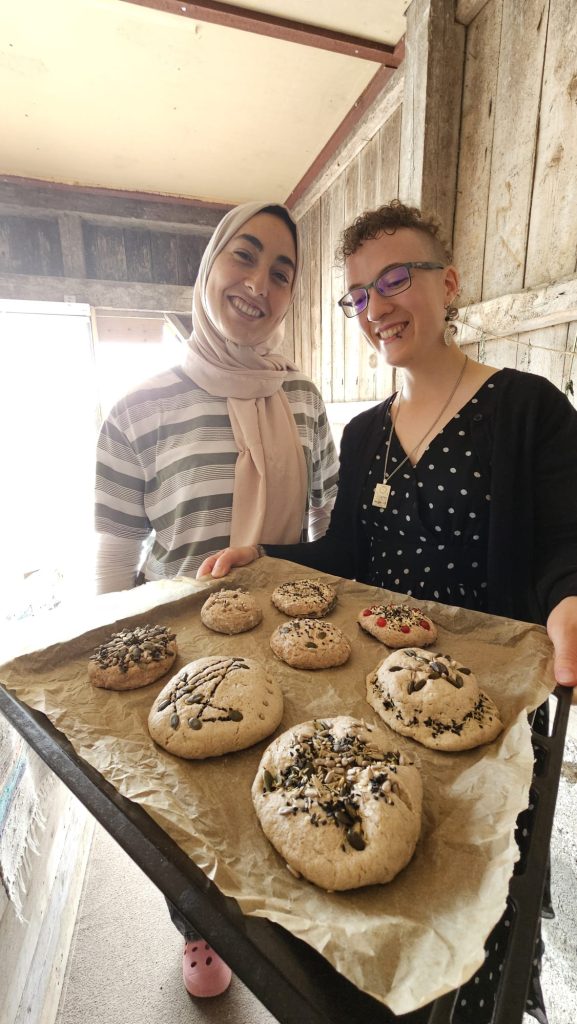
While the bread was baking in the oven, I took the group on a walk through the gardens and surrounding nature of Kurki. During the Sabbats, Nature Walks provide a wonderful opportunity to connect to the land and the changes of Mother Nature. With each celebration we can observe the changes in the growth and withering of plants. Now at the end of July, we had a very inspiring walk through the lush nature of summer, looked at various flowering plants and trees – like mugwort, meadowsweet, or the all-time favourite yarrow – and talked about their medicinal and spiritual properties. In that way, people who have been living so close to nature and still regarded most of these plants as ‘weeds’ could, for the first time, learn about what kind of treasures surround them.
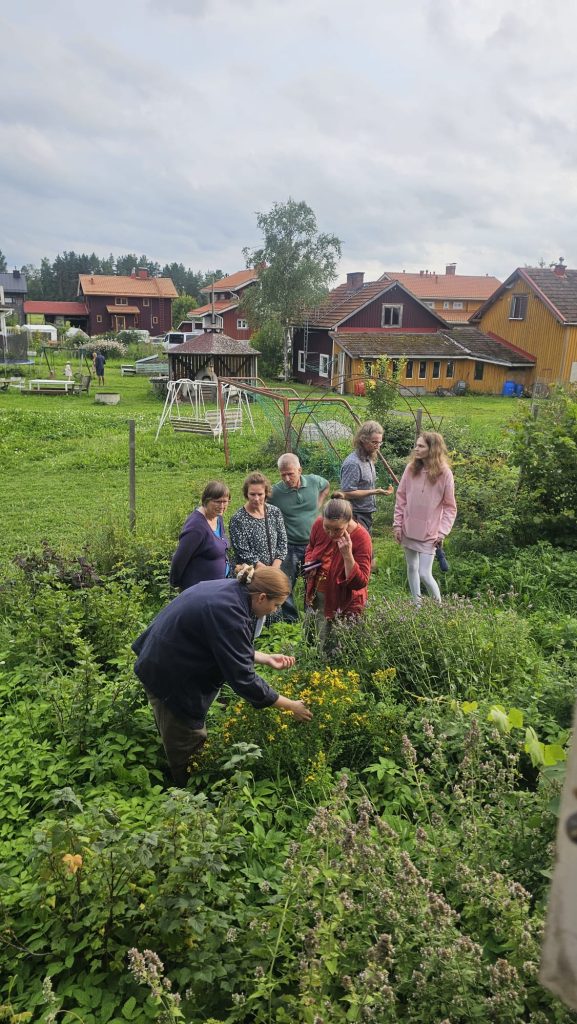
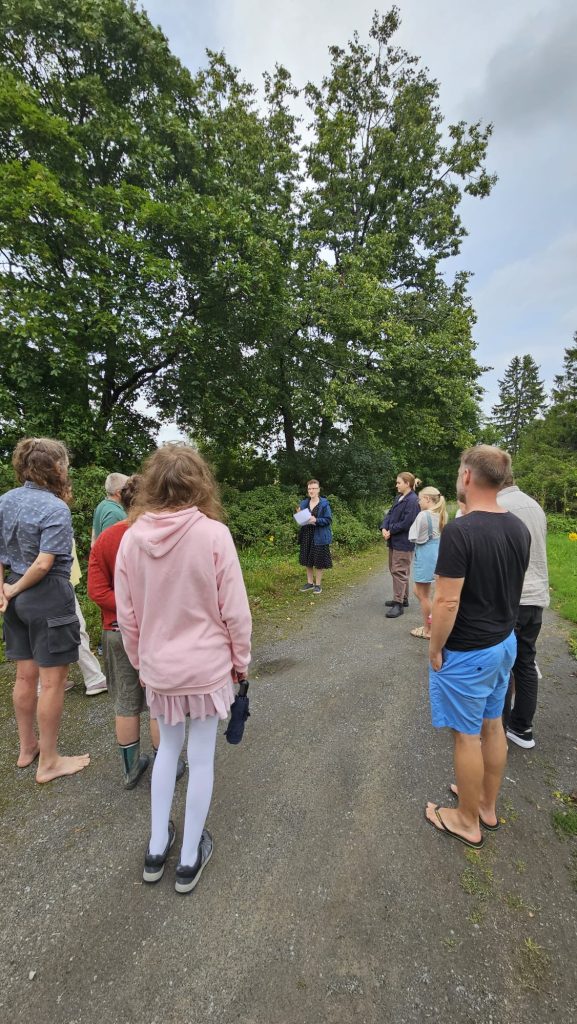
After this little lesson in Nature, it was finally time for the feast. Food should always be regarded as a major part of the Sabbats, not only for harvest celebrations. It is food that brings us together and lets us share moments full of love and indulgence. Thus, with a full table of delicious seasonal dishes we let the evening slowly come to an end.
Things I learned
When reflecting on my skills, I often point out how much I enjoy organising and planning celebrations. My personal project here at Kurki was yet again proof that I am capable of organising my own events almost completely on my own. Nevertheless, I also was reminded of that nasty perfectionism that so often sits on my shoulder and whispers words full of stress into my ears. I still have to learn how to be more relaxed with my plans. In stressful moments it is okay to ask for help.
One of my worries was, that people might not be interested enough in this kind of spirituality, or would find it weird to practice ‘magick’. But I was positively surprised how open-minded the villagers were. Even though it might not have been for everyone, they followed along and gave it all a try, which I am very grateful for. Finally, I also learned a lot substantially. I could deepen my knowledge about the Sabbats, Lughnasad, and especially had an opportunity to delve into Finnish mythology and traditions, which I didn’t really pay too much attention to in my practice before.
All in all, I am very proud of my personal project. It is beautiful to witness, when all the work and preparations come together and put smiles on peoples faces. So, let this Sabbat be a reminder to spend more time with your family, your friends, your community. Be mindful of Mother Nature and your inner world, slow down for an evening, enjoy good company and good food and – most importantly – be grateful for the rich harvest your life offers you again and again.